


When assembling heavy equipment,securing the enclosure is critical for both safety and performance.Two commonly used fasteners are screws and hexagon studs.Understanding their differences and applications can help engineers and technicians choose the best option for each project.
What Are Hexagon Studs and Screws?
Screws are simple fasteners that are easy to install and remove.They are commonly used in lightweight applications and for temporary assembly.
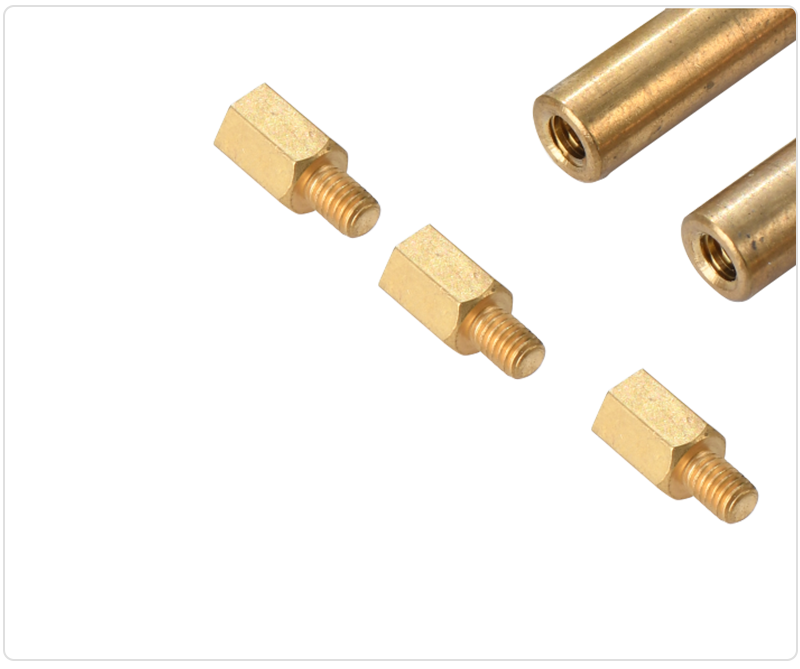
Hexagon studs,on the other hand,are threaded rods with a hexagonal head.They provide higher strength,better torque control,and superior stability,making them ideal for heavy-duty equipment enclosures.
Key Differences Between Hexagon Studs and Screws
Strength and Load Capacity:Hexagon studs can withstand higher stress than standard screws.
Vibration Resistance:Properly torqued hexagon studs are less likely to loosen under vibration.
Durability:Hexagon studs are often made of stainless steel or alloy steel for longer service life.
Installation Flexibility:Screws are easier to install,but hexagon studs allow precise torque control for heavy assemblies.
Advantages of Hexagon Studs for Equipment Enclosures
Enhanced Stability:Hexagon studs hold enclosures firmly in place,reducing the risk of loosening.
Long-Term Durability:Suitable for harsh industrial environments due to high material strength.
Maintenance-Friendly:Easy to replace without damaging the enclosure or surrounding components.
Customizable Torque:Ensures consistent fastening across multiple points in large assemblies.
When to Choose Screws or Hexagon Studs
For light enclosures or temporary installations,screws are cost-effective and convenient.
For heavy equipment enclosures or vibration-prone machinery,hexagon studs are preferred.They provide reliable fixation,minimize maintenance,and enhance operational safety.
Hexagon Stud Installation Tips
Always use a torque wrench to achieve the recommended torque.
Ensure threads are clean and undamaged before installation.
Consider corrosion-resistant materials for outdoor or humid environments.
Align all studs properly to avoid uneven load distribution.
FAQ
Q1:Can hexagon studs replace screws in all types of enclosures?
A:Hexagon studs are best for heavy-duty and vibration-prone applications,while screws suffice for light enclosures.
Q2:What material is best for hexagon studs in outdoor equipment?
A:Stainless steel or zinc-coated hexagon studs offer excellent corrosion resistance.
Q3:How do I prevent hexagon studs from loosening?
A:Apply the correct torque,use washers if necessary,and check alignment during installation.
Choosing the right fastener is crucial for heavy equipment enclosure assembly.While screws are suitable for light applications,hexagon studs offer superior strength,durability,and vibration resistance.Proper installation ensures stability,reduces maintenance,and enhances safety in industrial settings.
