


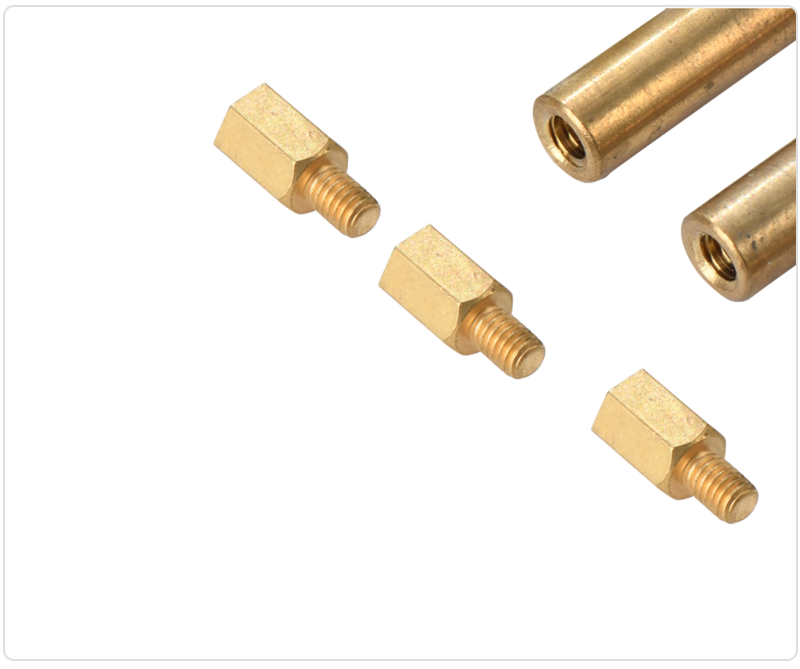
Hexagonal Studs manufacturing process refers to the series of industrial steps used to produce high-strength headless fasteners designed for mechanical assembly and structural connections. A Hexagonal Studs component is typically made to precise dimensional and mechanical standards because it is used in demanding environments such as machinery, automotive systems, and heavy equipment. The process includes material selection, forming, threading, heat treatment, surface finishing, and quality inspection to ensure durability and performance.
Material Selection
The first step in the manufacturing process is selecting the right raw material. Common materials include carbon steel, stainless steel, and alloy steel. The choice depends on the required strength, corrosion resistance, and working environment.
For high-load applications, alloy steel is often used due to its superior mechanical properties. Stainless steel is preferred in environments exposed to moisture or chemicals. The quality of raw material directly affects the performance of the final product.
Cutting and Blank Preparation
Once the material is selected, it is cut into specific lengths according to product specifications. This stage creates the initial blank form of the fastener.
Depending on the design, the blank may be prepared for either partial threading or full threading. At this stage, the material is inspected for surface defects and dimensional accuracy before moving to the next process.
Forging and Forming
The forming process is a critical stage in Hexagonal Studs production. The material is shaped using cold forging or hot forging techniques.
Cold forging is commonly used for high-precision products, as it improves strength and surface finish. Hot forging is used for larger or more complex components that require easier material deformation.
During this stage, the basic structure of the stud is formed, including any reduced sections or transition areas required by design.
Threading Process
After forming, the product undergoes threading. This is where the external threads are created using rolling or cutting methods.
Thread rolling is the preferred method because it strengthens the material by compressing the grain structure rather than removing material. This results in higher fatigue resistance and better durability.
A fully threaded stud may have threads applied along the entire length, while other designs may only be threaded on both ends, commonly known as a double end stud bolt.
Heat Treatment
Heat treatment is used to improve the mechanical properties of the hexagonal stud. The process typically includes quenching and tempering.
Quenching increases hardness, while tempering reduces brittleness and improves toughness. This balance ensures that the final product can withstand high stress and vibration without failure.
Proper heat treatment is essential for applications requiring high strength and long service life.
Surface Treatment
To enhance corrosion resistance and appearance, surface treatment is applied after heat treatment. Common methods include galvanizing, black oxide coating, and zinc plating.
Surface treatment not only protects the product from rust but also improves friction properties during installation. In industries such as marine or chemical processing, corrosion resistance is especially important.
Quality Inspection
The final stage of the manufacturing process is quality inspection. Each hexagonal stud is checked for dimensional accuracy, thread quality, surface defects, and mechanical strength.
Testing may include tensile strength tests, hardness tests, and coating thickness measurements. Only products that meet industry standards are approved for shipment.
This step ensures reliability and safety in real-world applications where failure is not acceptable.
The manufacturing process of hexagonal studs is a precise and controlled sequence of steps designed to ensure strength, durability, and performance. From raw material selection to final inspection, every stage plays a crucial role in producing a reliable fastener. Whether used as a double end stud bolt in mechanical assemblies or as a fully threaded stud in heavy-duty applications, the quality of manufacturing directly determines its performance in industrial environments.
