


Choosing a Ball head bolt comes down to confirming the ball-shaped head diameter matches your connecting hardware's angular range, verifying the material and finish suit your load and environment, and checking the thread and shank dimensions fit your specific assembly rather than a generically similar-looking bolt. This fastener's whole purpose is accommodating angular movement at a connection point, so a close-but-not-exact match can bind or wear prematurely.
What a Ball head bolt Does Differently
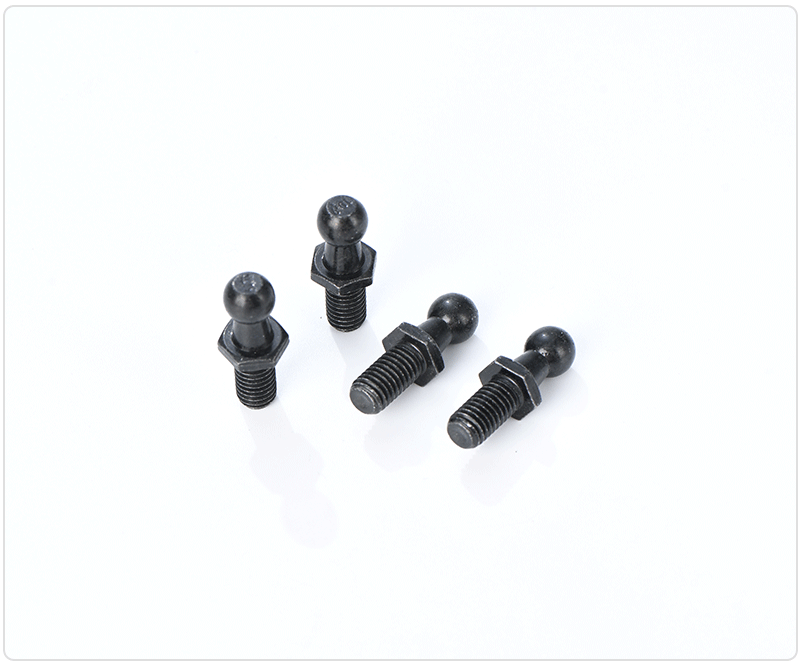
A ball head bolt uses a rounded or ball-shaped head instead of a flat or hex head, allowing the connected component to pivot or adjust angle at the connection point while still maintaining a secure fastening. As a reference point, a common construction uses SCM435 alloy steel in an M8x33 size, with a hexagonal, 16.0mm across-flats ball-shaped head. This head geometry is what separates it functionally from a standard bolt — confirm your application actually needs angular adjustment at this connection point before specifying a ball head design over a simpler standard bolt.
Match Material and Finish to Load and Environment
SCM435 alloy steel is a common base material for ball head Bolts used in automotive, machinery, and industrial equipment applications, chosen for its combination of strength and toughness under the combined bending and rotational stress this head design experiences. Black zinc-nickel alloy plating is a common finish choice for corrosion resistance. Confirm both the base material grade and the specific plating process for your application's exposure conditions, particularly if the bolt operates in a moving assembly where finish wear at the ball contact point matters more than on a static fastener.
Confirm Thread and Shank Dimensions Match Your Assembly
Because a ball head bolt's function depends on precise geometry at the head, confirm the exact thread size, shank length, and across-flats dimension against your assembly drawing rather than sourcing by a general size description. A ball head bolt that's close in size but slightly off in head diameter can bind against its mating component or fail to provide the intended range of angular movement — request a sample or CAD drawing for verification before committing to a production quantity.
Questions to Ask Before You Order Ball Head Bolts
Does your application actually require angular adjustment at this connection point?
What's the exact thread size, shank length, and ball head diameter your assembly requires?
Does SCM435 alloy steel meet your load requirement, or does your application call for a different base material?
What finish best suits your environment, particularly at the ball contact surface in a moving assembly?
Can they provide a sample or CAD drawing for fit verification before production?
If you know your dimensions and application, send them directly for a quote.
Frequently Asked Questions
What is a ball head bolt used for?
Ball head bolts are used where a connection point needs to accommodate angular adjustment while remaining securely fastened, commonly in automotive, machinery, and industrial equipment applications.
What material are ball head bolts made from?
SCM435 alloy steel is a common base material, chosen for strength and toughness under combined bending and rotational stress. Confirm the specific grade and finish for your application's load and environment.
How do I know if I need a ball head bolt instead of a standard bolt?
If your connection point needs to pivot or adjust angle while staying fastened, a ball head design is worth considering. If the connection is static, a standard head bolt is generally simpler and more cost-effective.
