


When selecting fasteners for mechanical assembly, one common question is: Are hex cap screws fully threaded? The answer is not always. Hex cap screws can be manufactured with either a fully threaded shank or a partially threaded shank, depending on their size, standard, grade, and intended application. Understanding the difference is important because thread length directly affects how a fastener engages with a mating component and how effectively it transfers clamping force.
Hex cap screws are widely used in machinery, automotive components, industrial equipment, construction hardware, and general mechanical assemblies. Their hexagonal head allows a wrench or socket to apply sufficient torque during installation, while the threaded shank provides the connection between the screw and the mating part.
What Are Hex Cap Screws?
Hex cap screws are mechanical fasteners with a hexagonal head and a cylindrical shank containing external threads. They are designed to be installed using a wrench or socket and are commonly used where a strong, removable mechanical connection is required.
Depending on the design, a hex cap screw may have threads extending along most or all of its shank, or it may have an unthreaded section between the head and the threaded portion. This unthreaded area is often called the grip length or unthreaded shank.
The key difference is therefore not the hexagonal head itself, but the amount of the shank that is threaded.
Are Hex Cap Screws Fully Threaded?
Not necessarily. Some hex cap screws are fully threaded, while others are only partially threaded.
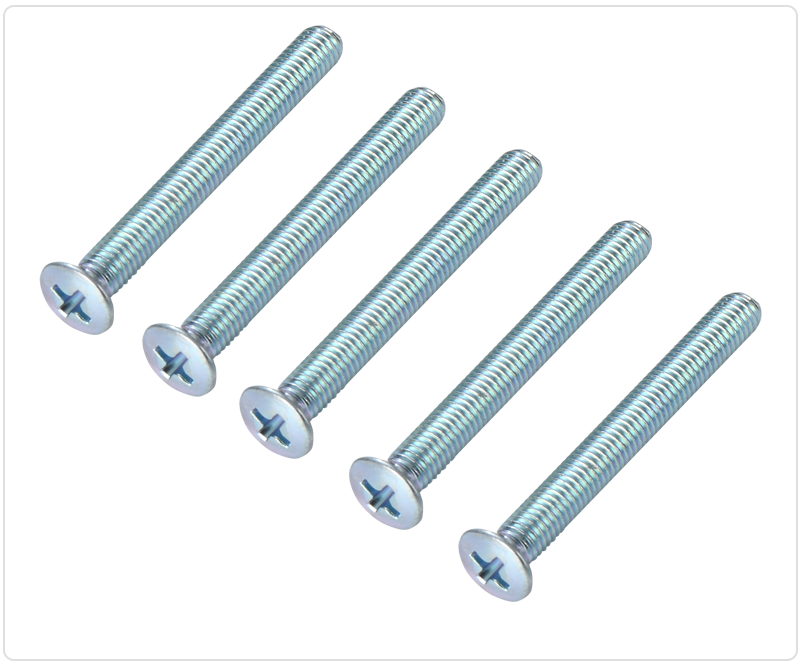
A fully threaded screw has threads running from near the underside of the head to the end of the shank. Because the entire usable shank is threaded, it can engage with a tapped hole or nut over a relatively long distance. This design is useful when the thickness of the assembled components varies or when maximum thread engagement is desired.
A partially threaded hex cap screw has a smooth, unthreaded section beneath the head. The threaded portion begins farther down the shank. This design can be advantageous when the fastener must pass through one or more components before engaging with the threaded hole.
For this reason, thread configuration should be selected based on the joint design rather than assuming that every hex cap screw is fully threaded.
How Do Hex Cap Screws Work?
The working principle of hex cap screws is based on thread engagement, torque, friction, and clamping force.
When a wrench or socket rotates the hexagonal head, torque is transferred through the screw body. The external thread moves against the internal thread of a nut or tapped hole. This converts rotational motion into axial movement.
As the screw advances, the components being joined are pulled together. The resulting preload creates a clamping force that holds the assembly in position.
Several factors affect the performance of the connection:
Thread pitch
Thread diameter
Thread engagement length
Applied torque
Friction between mating surfaces
Material strength
Fastener grade
Joint thickness
Surface coating
A fully threaded design can provide continuous thread engagement along the available shank. However, that does not automatically mean it is stronger for every application. Joint geometry and load direction are equally important.
Fully Threaded vs. Partially Threaded Hex Cap Screws
The choice between fully threaded and partially threaded designs depends on how the fastener is expected to carry the load.
Fully threaded fasteners are often preferred when the screw needs to engage deeply with a tapped hole or nut. They can also be useful where the joint does not require a specific smooth grip section.
Partially threaded fasteners provide an unthreaded shank that can act as a grip section. In certain structural or mechanical joints, this can help position the connected components and provide a larger smooth bearing area through the clamped material.
For example, if two metal plates need to be clamped together and the fastener must pass through both plates before entering a tapped hole, the required thread length must be calculated carefully. Too much unthreaded shank may prevent sufficient thread engagement, while excessive threading in the grip area may not provide the desired joint configuration.
Therefore, choosing between fully threaded screws and partially threaded versions should be based on the joint thickness, hole configuration, load requirements, and required thread engagement.
How Are Hex Cap Screws Manufactured?
The manufacturing process of hex cap screws generally begins with steel wire or another suitable metal material. The material is cut into appropriate lengths before being formed into the basic screw shape.
A typical manufacturing sequence may include:
1. Cold Heading
Cold heading, also known as cold forming, is commonly used to create the head and basic body of the fastener. Metal wire is placed into a die and formed under high pressure.
This process can produce the hexagonal head efficiently while maintaining good material utilization.
2. Shank Forming
The shank is formed to the specified diameter and length. Depending on the product design, the screw may be manufactured with either a fully threaded or partially threaded configuration.
3. Thread Rolling
Threads are commonly produced through thread rolling rather than cutting. In thread rolling, hardened dies press against the rotating or moving blank and form the thread profile through plastic deformation.
Thread rolling can improve the surface finish and create favorable grain flow around the thread profile. This can contribute to good fatigue resistance when the process is properly controlled.
4. Heat Treatment
For higher-strength fasteners, heat treatment may be used to achieve the required mechanical properties. Processes such as quenching and tempering can increase hardness and tensile strength.
5. Surface Treatment
Depending on the application, hex cap screws may receive surface treatments such as zinc plating, Zinc-Nickel Coating, black oxide, phosphate, or other protective finishes.
Surface treatment can improve corrosion resistance, appearance, and compatibility with the surrounding components.
6. Inspection
Finished fasteners are inspected for dimensions, thread accuracy, head geometry, mechanical properties, surface condition, and other customer or industry requirements.
Common inspection tools include thread gauges, calipers, micrometers, hardness testers, and torque-related testing equipment.
What Materials Are Used for Hex Cap Screws?
Carbon steel and alloy steel are among the most common materials used for industrial hex cap screws.
Carbon steel offers a practical combination of strength, machinability, and cost efficiency. It is commonly used for general machinery and equipment applications, particularly when an appropriate protective coating is applied.
Alloy steel is selected when higher strength and improved mechanical performance are required. Alloying elements can help achieve specific hardness, tensile strength, and fatigue properties after heat treatment.
Stainless steel is another important option. Stainless steel fasteners provide better corrosion resistance than ordinary carbon steel and are widely used in outdoor equipment, food-processing environments, chemical equipment, and applications exposed to moisture.
The appropriate material depends on the working environment, mechanical load, temperature, corrosion conditions, and required service life.
Advantages of Hex Cap Screws
One major advantage of hex cap screws is their convenient installation. The six-sided head provides multiple contact surfaces for a wrench or socket, allowing relatively high installation torque.
Other advantages include:
Good clamping capability
Easy installation and removal
Wide range of sizes and grades
Availability in different thread configurations
Compatibility with nuts and tapped holes
Suitable for automated and manual assembly
Various surface treatments available
Because of these characteristics, hex head screws are commonly found in equipment assembly and industrial fastening systems.
Potential Limitations
Although hex cap screws are versatile, they are not ideal for every fastening situation.
A standard hexagonal head requires sufficient clearance for a wrench or socket. In confined spaces, a Socket head cap screw or another low-profile fastener may be more suitable.
Another consideration is thread engagement. A fastener with an inappropriate thread length may result in insufficient engagement or unnecessary interference with the joint.
Corrosion is also a concern when ordinary carbon steel fasteners are used in humid or chemically aggressive environments. In such cases, stainless steel or an appropriate surface coating may be required.
Finally, applying excessive torque can stretch or damage the fastener, while insufficient torque can result in inadequate preload. Proper installation torque should therefore be determined according to the fastener specification and joint requirements.
Common Applications
Hex cap screws are used across a wide range of industries because they can provide reliable mechanical fastening and are available in many configurations.
Typical applications include:
Automotive manufacturing: They are used in brackets, mechanical assemblies, engine-related components, chassis systems, and equipment fixtures.
Industrial machinery: Machine frames, equipment housings, structural components, and mechanical assemblies often use hex cap screws for removable connections.
Construction equipment: Heavy-duty machinery and structural assemblies may use high-strength fasteners designed to withstand significant mechanical loads.
Metal fabrication: Fabricated steel structures and machine components can use hex cap screws where serviceability and mechanical strength are required.
General equipment assembly: Pumps, motors, conveyors, fixtures, and industrial devices may use threaded fasteners in various sizes and grades.
The exact fastener specification should always be matched to the load, material, environment, and assembly requirements.
How to Choose the Right Hex Cap Screw
When selecting a hex cap screw, thread length should not be the only consideration. Start by determining the required diameter, length, thread pitch, thread type, material, strength grade, and surface finish.
Next, determine whether a fully threaded or partially threaded design is more appropriate for the joint.
For tapped-hole applications, sufficient thread engagement is essential. For joints involving multiple components, the grip length should be considered carefully so that the fastener can clamp the assembly properly.
Environmental conditions should also be evaluated. For outdoor or corrosive applications, a suitable coating or stainless steel construction may be preferable.
Finally, verify the dimensional and mechanical requirements against the applicable fastener standard or customer specification before production or installation.
Frequently Asked Questions
Are all hex cap screws fully threaded?
No. Hex cap screws can be either fully threaded or partially threaded. The thread length depends on the fastener specification, dimensions, standard, and intended application.
Are fully threaded screws stronger?
Not necessarily. Strength depends on the fastener material, grade, diameter, heat treatment, thread design, and joint configuration. A fully threaded design provides extensive thread engagement, but it is not automatically stronger in every application.
What is the difference between a hex cap screw and a machine screw?
Hex cap screws generally have a larger hexagonal head designed for wrench or socket installation, while Machine Screws are typically smaller fasteners used with tapped holes or nuts. Their specific dimensions and standards can vary depending on the product type.
Can hex cap screws be customized?
Yes. Manufacturers can produce fasteners with different dimensions, thread lengths, materials, strength grades, coatings, and other specifications depending on production capabilities and customer requirements.
Conclusion
So, are hex cap screws fully threaded? The answer is: some are, but not all. Hex cap screws can be manufactured with full-length threads or with a combination of threaded and unthreaded sections.
The right design depends on the joint structure, required thread engagement, load conditions, material, installation method, and operating environment. Understanding these factors helps engineers and buyers select the appropriate fastener instead of choosing based only on head shape or nominal size.
Whether the application requires fully threaded screws for maximum available thread engagement or partially threaded fasteners with a defined grip length, the manufacturing specification should clearly define the required dimensions and mechanical properties. With the right material, thread profile, heat treatment, and surface finish, hex cap screws can provide a practical fastening solution for a wide range of mechanical and industrial assemblies.
