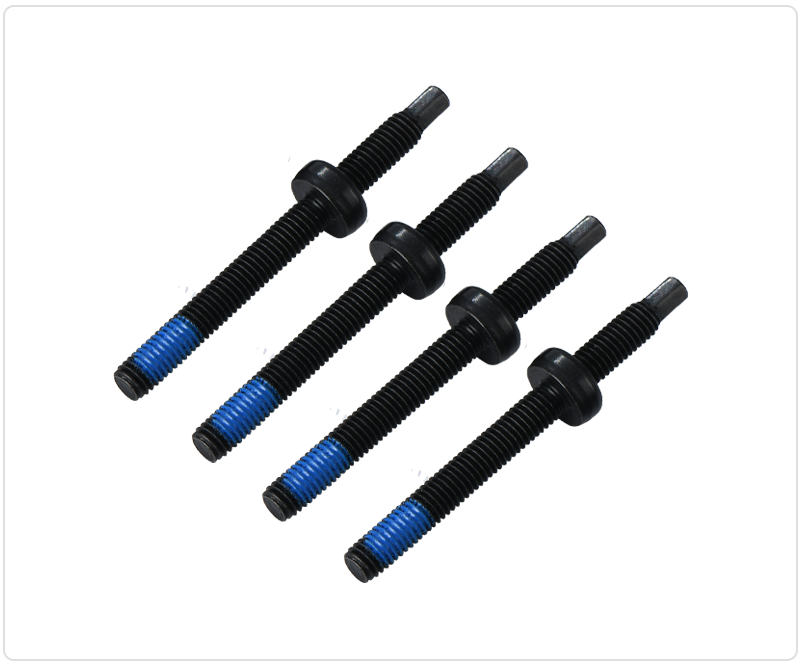
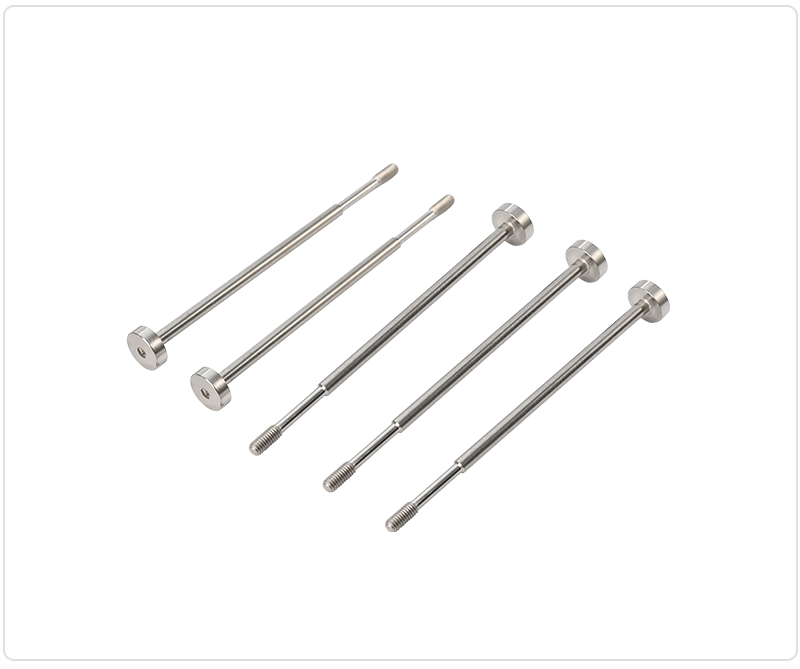
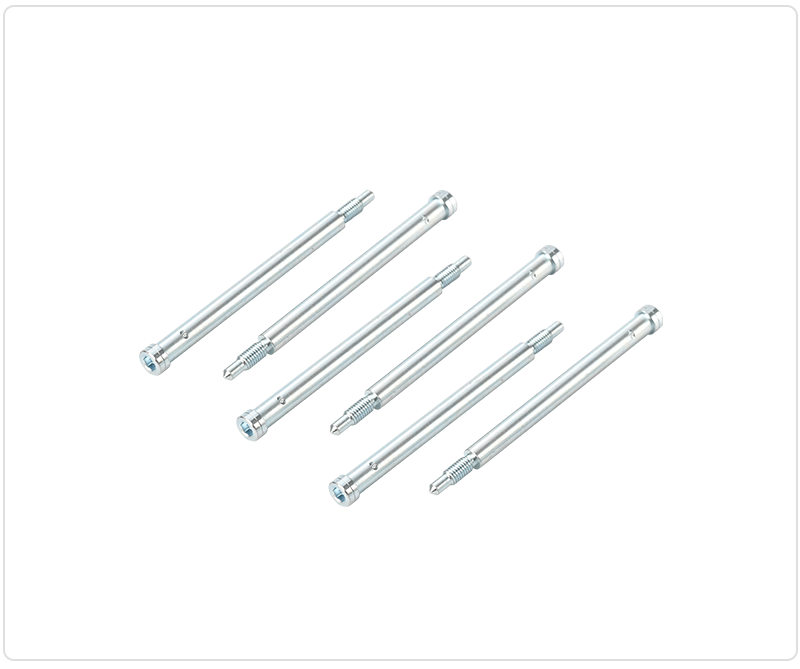
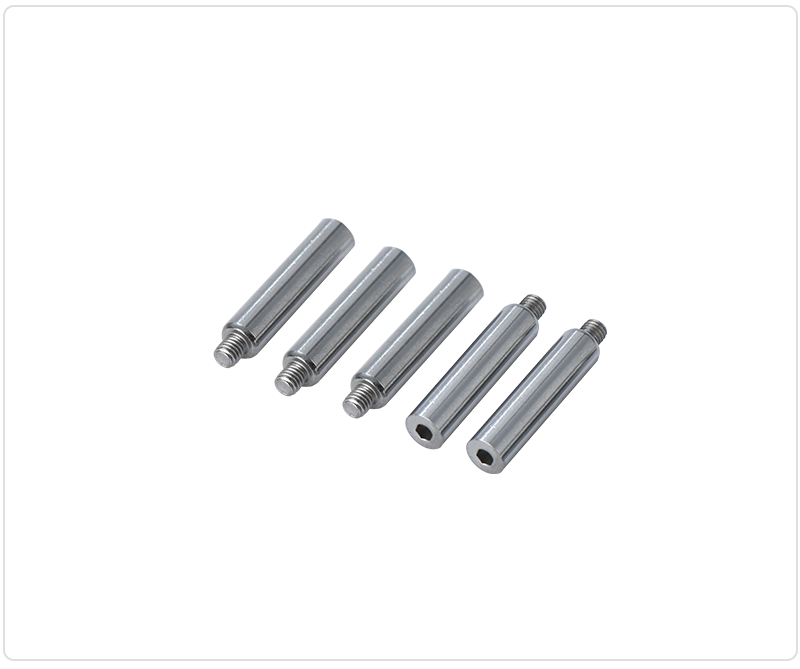
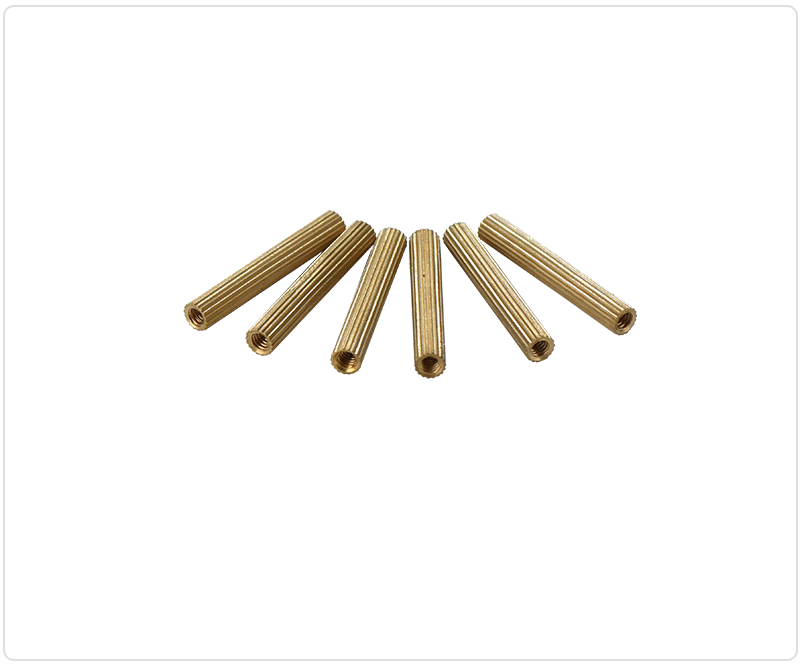
Press Fit Threaded Studs – M5x52 Double-Ended Steel Stud with Threadlocker
What Are Press Fit Threaded Studs?
Press fit threaded studs are fasteners installed by mechanically pressing them into a pre-punched or drilled hole.Instead of relying on welding or tapping,they use controlled interference between the stud and the base material to achieve secure retention.
Manufacturing Process&Working Principle
Manufacturing Steps
Cold Heading:The 10B21 steel wire is cold-formed to ensure high mechanical strength.
Thread Rolling:Precision rolling creates accurate M5 threads with superior fatigue resistance.
Heat Treatment:Enhances hardness and load-bearing capacity.
Surface Treatment:
Black zinc-nickel alloy plating improves corrosion resistance.
Pre-applied blue anti-loosening adhesive(180°resistant)ensures vibration stability.
Quality Inspection:Dimensional accuracy,torque resistance,and pull-out strength testing.
Product Parameters
Product Number | ALSA0570043 |
Description | M5x52 Double-ended bolt, with Loctite 180° threadlocker, Part Number: 500100441 |
Specifications | M5X52 |
Material | 10B21 |
Surface Treatment | Black zinc-nickel alloy + anti-loosening blue adhesive |
Application Industry | electrical appliances |
FAQ – Press Fit Threaded Studs
Q1: Are press fit studs suitable for thin metal sheets?
Yes, press fit studs are specifically designed for thin sheet metal applications where welding or tapping is impractical.
Q2: Can these studs resist vibration?
This model includes a pre-applied blue threadlocker, offering excellent resistance to vibration and loosening.
Q3: What is the advantage of zinc-nickel coating?
Zinc-nickel provides higher corrosion resistance than standard zinc plating, making it suitable for long-term use in electrical appliances.
Q4: Can press-in threaded studs be customized?
Yes, dimensions, materials, surface treatments, and threadlockers can be customized based on application needs.
Q5: Are steel press fit studs reusable?
The stud itself is permanently fixed, but the threaded ends allow repeated assembly and disassembly of mating components.