


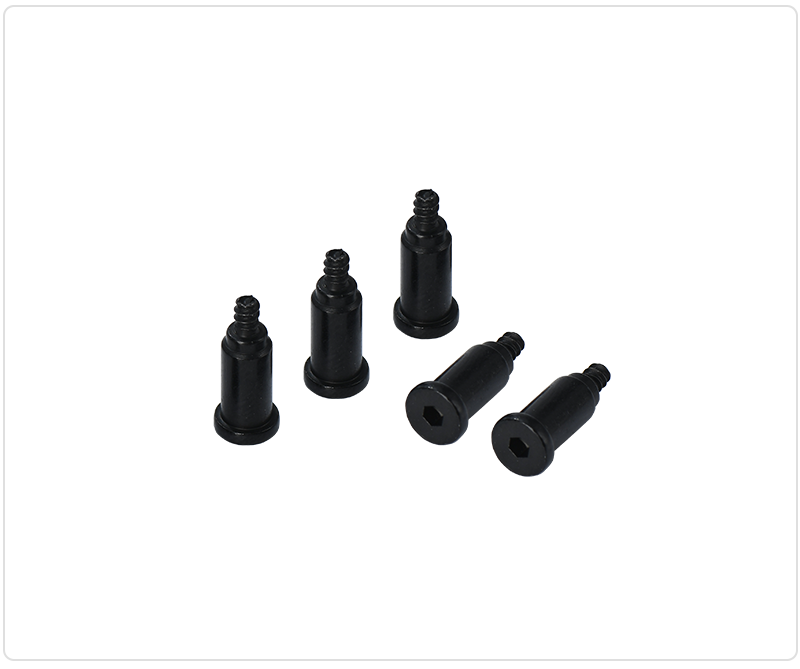
A shoulder screw is a precision fastener featuring three distinct sections: a threaded end, an unthreaded cylindrical shoulder, and a head. Unlike conventional screws, its shoulder provides a controlled diameter and bearing surface, allowing it to function as a locating pin, pivot shaft, spacer, or guide in mechanical assemblies. Shoulder screws are widely used in automation equipment, machinery, automotive components, electronics, and industrial fixtures where accurate alignment and controlled movement are required.
For engineers, OEM manufacturers, and industrial buyers, selecting a shoulder screw involves more than matching thread size. Shoulder diameter, length, hardness, surface finish, material, and dimensional tolerance directly influence assembly accuracy, wear resistance, and service life. Understanding how these fasteners are manufactured also helps buyers evaluate product consistency and supplier capabilities.
What Are the Main Parts of a Shoulder Screw?
A shoulder screw has a distinctive stepped structure. Each section performs a different mechanical function.
Head: Provides the clamping surface and transfers installation force. Common head styles include socket head, button head, and low-profile designs.
Shoulder: The smooth cylindrical section that acts as a bearing surface, locating feature, or pivot. Its diameter and length are critical to assembly accuracy.
Threaded end: Connects the fastener to a threaded hole or nut. Thread size, pitch, and engagement length determine fastening compatibility.
The shoulder is the defining feature. In a rotating assembly, it can support a roller or linkage while allowing movement around the cylindrical surface. In positioning applications, it provides a repeatable reference diameter that helps maintain alignment between components.
How Does a Shoulder Screw Differ from a Standard Screw?
A standard screw typically uses its threaded section to engage and secure components. A shoulder screw separates the fastening function from the positioning or bearing function.
When installed, the threaded end secures the assembly while the unthreaded shoulder can extend through another component. This arrangement helps prevent threads from contacting moving parts and provides a more controlled working surface.
For example, an industrial roller mounted on a shoulder screw can rotate around the smooth shoulder while the threaded end remains fixed to the machine frame. A standard fully threaded screw may introduce friction, inconsistent clearance, and unnecessary wear in the same application.
Shoulder screws are therefore selected when mechanical alignment, controlled spacing, or rotational movement is more important than simple fastening alone.
Materials and Mechanical Properties of Shoulder Screws
Material selection determines the strength, hardness, corrosion resistance, and wear performance of a shoulder screw. The appropriate material depends on the operating environment, applied load, movement frequency, and exposure to chemicals or moisture.
Alloy steel is commonly used where high strength and wear resistance are required. Heat treatment can increase hardness and improve resistance to deformation, particularly in applications involving repeated contact or rotational loading.
Stainless steel is suitable for applications requiring corrosion resistance, including food-processing equipment, medical-related machinery, and outdoor assemblies. However, its mechanical properties vary by grade, so buyers should not assume all stainless steel shoulder screws provide the same strength.
Carbon steel may be selected for general industrial applications where cost and mechanical performance must be balanced. Surface treatments such as zinc plating, black oxide, or other specified coatings can improve corrosion protection or modify surface characteristics.
A qualified shoulder screw manufacturer should select materials according to the required mechanical properties rather than relying on material names alone. Material certificates, hardness testing, and coating specifications help verify that the finished fastener meets application requirements.
How Shoulder Screws Are Manufactured
Manufacturing precision is essential because the shoulder acts as a functional bearing and locating surface. Small dimensional deviations can affect clearance, alignment, and component movement.
Raw Material Selection and Preparation
Production begins with selecting steel or stainless steel bar stock that meets the required chemical composition and mechanical properties. Material diameter, surface condition, and internal quality influence subsequent machining and forming operations.
Incoming inspection may include material certification, dimensional checks, and hardness verification. Inconsistent raw material can lead to machining difficulties, dimensional variation, or unpredictable heat-treatment results.
Heading and Initial Forming
Depending on the design and production method, the screw head and basic fastener geometry may be formed through cold heading or machining. Cold heading uses controlled pressure to shape metal without removing large amounts of material, improving production efficiency for suitable high-volume designs.
Material ductility, forming pressure, die condition, and lubrication influence head dimensions and surface quality. Improper forming can produce cracks, folds, or incomplete head geometry. These defects may affect the head's strength and installation performance.
Shoulder Machining and Thread Processing
The cylindrical shoulder is produced through precision turning, grinding, or other suitable machining operations. This stage controls shoulder diameter, length, concentricity, and surface finish.
These dimensions directly influence how the screw fits into the mating component. An oversized shoulder may prevent assembly, while an undersized shoulder can create excessive clearance and unwanted movement. Poor concentricity can also cause uneven loading in rotating applications.
The threaded section is produced through an appropriate threading process, such as thread rolling or cutting. Thread rolling forms the thread through material displacement and can improve surface integrity, while cutting removes material to create the required profile. Process selection depends on material, geometry, production volume, and specification requirements.
Heat Treatment and Surface Finishing
For applications requiring higher mechanical strength, heat treatment can improve hardness and resistance to wear. The heating and cooling process must be controlled to avoid excessive distortion, cracking, or inconsistent hardness.
After heat treatment, grinding or additional finishing may be necessary to restore critical shoulder dimensions. Surface treatments are then applied according to the corrosion-resistance and appearance requirements. Coating thickness must be considered because excessive buildup can affect shoulder fit and thread compatibility.
Cleaning and Final Inspection
Machining oils, metal particles, and finishing residues must be removed before packaging. Cleaning helps prevent contamination during assembly and reduces the risk of corrosion caused by retained processing chemicals.
Final inspection verifies critical dimensions, thread quality, hardness, surface condition, and coating consistency. Production records and batch traceability help manufacturers identify process deviations and maintain repeatable quality.
Which Dimensions Determine Shoulder Screw Performance?
Dimensional accuracy is particularly important because different sections perform separate mechanical functions. Buyers should pay attention to the following characteristics:
Shoulder diameter: Determines the fit with bearings, rollers, bushings, and positioning holes.
Shoulder length: Controls spacing and the available working surface for moving components.
Shoulder straightness and concentricity: Affect alignment and load distribution.
Thread diameter and pitch: Determine compatibility with the mating threaded component.
Head dimensions: Affect tool access, clamping contact, and installation clearance.
Surface roughness: Influences friction, wear, and contact performance.
Manufacturers use precision measuring instruments such as micrometers, calipers, thread gauges, and coordinate measuring equipment according to the required tolerance level. Optical inspection may also be used for small or complex geometries.
Common Quality Problems and Their Causes
Shoulder screw defects are not always visible after assembly. Some dimensional or material problems only become apparent under load or during repeated movement.
Incorrect shoulder diameter can result from tool wear, machining instability, or insufficient dimensional control. It may cause excessive clearance or prevent proper installation.
Surface scratches and roughness can increase friction and accelerate wear. These issues may originate from damaged tooling, poor handling, or inadequate finishing.
Hardness inconsistency may result from unsuitable heat-treatment parameters or variations in raw material. It can reduce wear resistance or increase the risk of deformation.
Thread defects such as damaged profiles, burrs, or incorrect pitch can make installation difficult and reduce fastening reliability.
Coating defects including uneven thickness, poor adhesion, and incomplete coverage can reduce corrosion protection and affect dimensional fit.
Effective quality control requires identifying the process responsible for each defect. Corrective action should address tooling, process parameters, material specifications, and inspection methods rather than relying only on sorting finished products.
Where Are Shoulder Screws Used?
Shoulder screws are used in mechanical assemblies where fastening must be combined with accurate positioning or controlled movement.
Automation equipment: Used as pivot points, guide shafts, and locating fasteners in automated mechanisms.
Conveyor systems: Support rollers and rotating components while maintaining defined spacing.
Automotive equipment: Used in linkages, mechanical brackets, and moving assemblies according to design requirements.
Electronics manufacturing: Provide positioning and spacing functions in precision equipment and assembly fixtures.
Industrial machinery: Support moving parts and help maintain alignment in mechanical systems.
The correct shoulder screw depends on load direction, rotational speed, mating material, lubrication, operating temperature, and required service life. Engineers should evaluate the complete assembly rather than selecting a fastener based only on nominal dimensions.
How to Choose a Reliable Shoulder Screw Manufacturer
For overseas wholesalers, importers, and OEM buyers, supplier evaluation should focus on manufacturing capability, dimensional consistency, and quality documentation.
A professional shoulder screws manufacturer should be able to explain its machining processes, material selection, heat-treatment capabilities, and inspection standards. Buyers should also confirm whether the manufacturer can support customized shoulder diameters, lengths, head styles, thread specifications, and surface treatments.
When evaluating a shoulder screw supplier or shoulder screws supplier, consider these points:
Availability of material certificates and mechanical property reports.
Precision machining capability for shoulder diameter and length.
Hardness and heat-treatment inspection procedures.
Thread gauges and dimensional measurement equipment.
Coating thickness and corrosion-resistance verification.
Production capacity, batch consistency, and delivery management.
A capable shoulder screw factory should also maintain documented inspection procedures and traceable production records. For customized orders, buyers should provide drawings with clear dimensional tolerances, material grades, surface requirements, and application details to reduce communication errors.
Frequently Asked Questions
Can a shoulder screw be used as a shaft?
Yes. Its smooth cylindrical shoulder can serve as a short shaft or pivot surface in suitable mechanical applications. Load, hardness, surface finish, and dimensional tolerances must be considered.
Are shoulder screws suitable for rotating components?
Yes. They can support rollers, pulleys, and linkages that rotate around the shoulder. The design must provide suitable clearance, lubrication, and wear resistance.
What is the difference between a shoulder screw and a shoulder bolt?
The terms are sometimes used interchangeably in commercial applications. Actual specifications, head design, thread dimensions, and applicable standards should be checked rather than relying on the product name alone.
Why is shoulder diameter so important?
Shoulder diameter determines the fit and alignment between the fastener and mating components. Incorrect dimensions can cause excessive movement, assembly difficulties, and uneven loading.
Conclusion
A shoulder screw is more than a conventional fastener. Its stepped structure combines secure threaded fastening with a precision cylindrical surface for positioning, spacing, and mechanical movement. Material selection, machining accuracy, heat treatment, surface finishing, and dimensional inspection all influence its performance.
For B2B buyers, working with an experienced shoulder screw manufacturer or shoulder screw supplier helps ensure that products meet the required mechanical specifications and maintain consistent quality across production batches. Evaluating manufacturing processes and inspection capabilities is essential for reliable industrial applications.
