

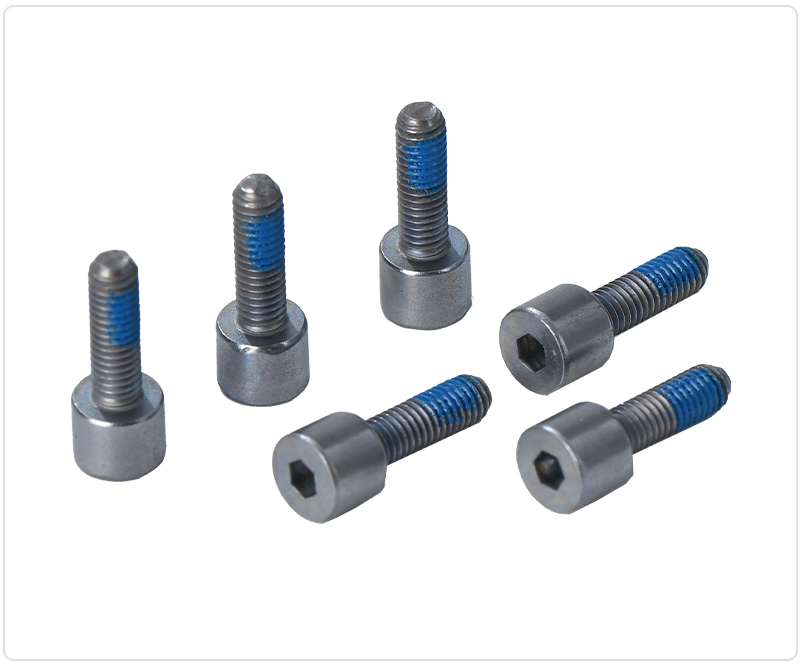
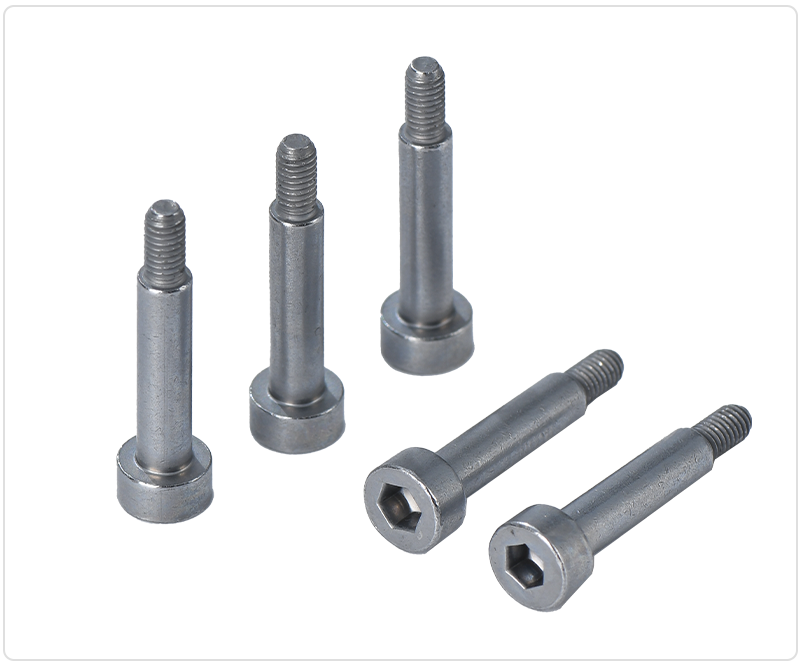
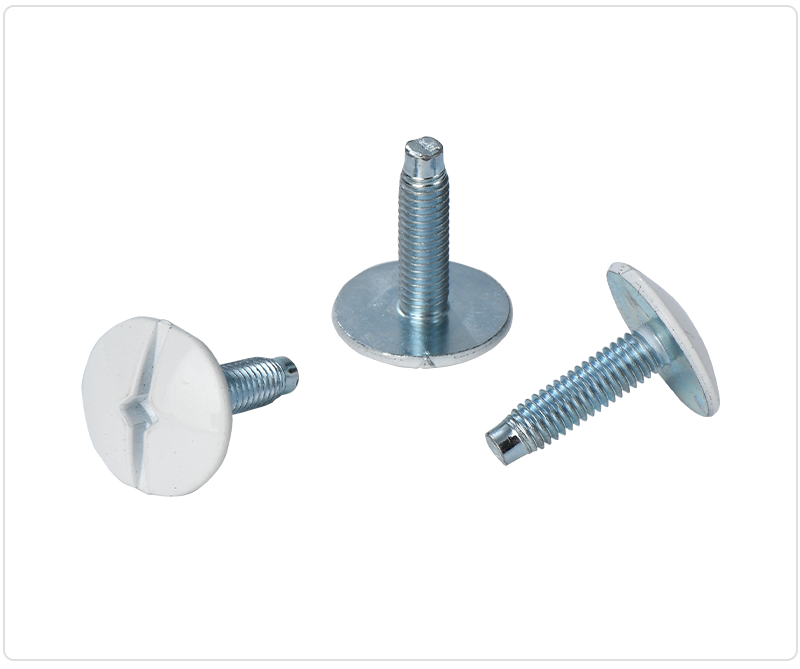
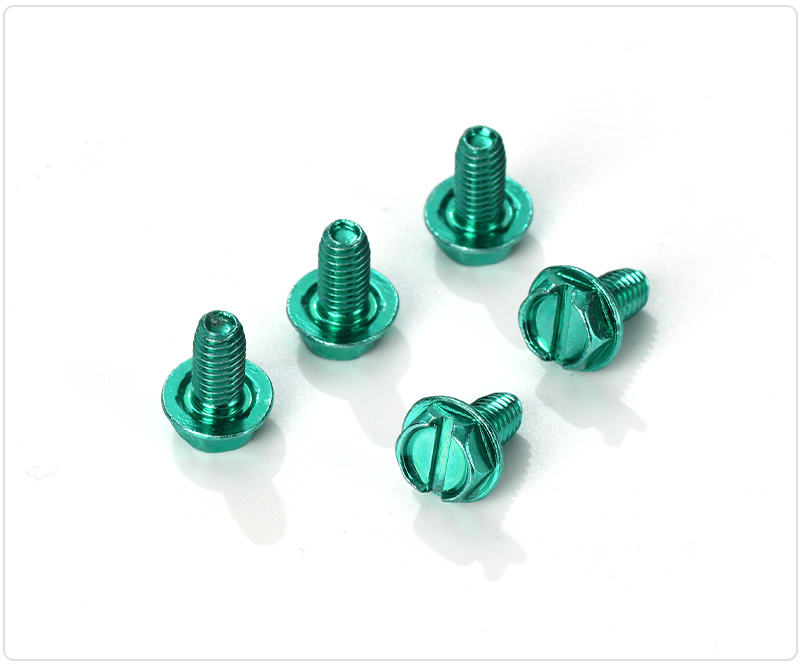
| Product Code | ALSA1190028 |
| Description | Flat-head hex-socket tri-lobular self-tapping shoulder screw |
| Specifications | 2.6X14-CB |
| Material | 1018 (Steel) |
| Surface Treatment | Black zinc-nickel alloy |
| Application Industries | 3D printer |

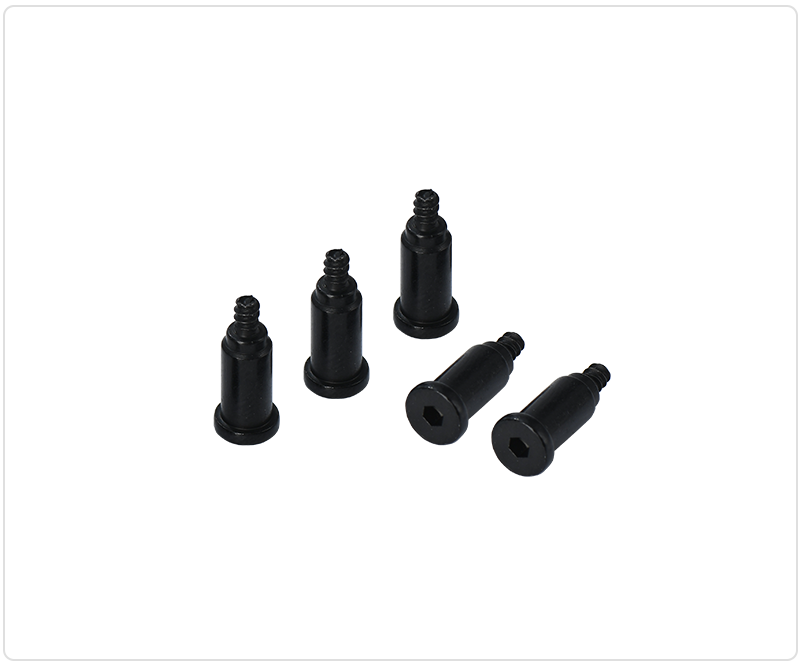

The 2.6X14-CB Shoulder Screw is a flat-head hex-socket tri-lobular self-tapping screw designed for fastening applications in 3D printer assemblies. Manufactured from 1018 steel and treated with a black zinc-nickel alloy coating, this fastener combines a specialized head configuration, thread-forming design, and protective surface finish for mechanical assembly requirements. Unlike conventional fastening screws, this product integrates a flat head, internal hex socket, and tri-lobular self-tapping thread structure. Each feature serves a different function during installation, from tool engagement to thread formation and head seating. These structural characteristics make it suitable for equipment manufacturers looking for specialized fastening components for compact mechanical assemblies. For 3D printer manufacturers, selecting the appropriate screw involves considering the mating materials, installation space, fastening requirements, and environmental conditions. This 2.6X14-CB shoulder screw provides a fastening option for compatible equipment structures and mechanical components. As a specialized shoulder screw product, it can also be considered for OEM and ODM fastening projects where consistent dimensions, material selection, and surface treatment are important.
Product Code | ALSA1190028 |
Description | Flat-head hex-socket tri-lobular self-tapping shoulder screw |
Specifications | 2.6X14-CB |
Material | 1018 (Steel) |
Surface Treatment | Black zinc-nickel alloy |
Application Industries | 3D printer |
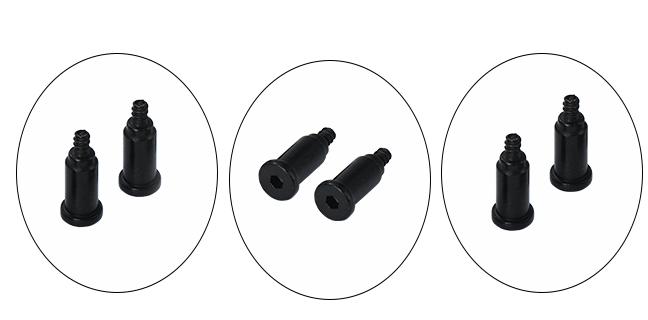
The performance and installation characteristics of a fastening component depend on its structural design. This shoulder screw combines three important design elements: a flat head, an internal hex socket, and a tri-lobular self-tapping thread configuration.
The flat head design is suitable for applications where the screw head needs to sit flush or close to the surrounding surface when installed in a compatible countersunk seat.
In compact equipment such as 3D printers, protruding fastener heads may interfere with nearby components, moving parts, or enclosure structures. A properly matched flat-head screw can help reduce head protrusion and maintain a more organized assembly profile.
The head seating geometry should be matched with the corresponding mounting hole and countersink design. Incorrect seating dimensions may cause uneven contact, insufficient seating, or localized stress during tightening.
For equipment manufacturers, selecting the correct flat-head configuration is therefore an important consideration in mechanical assembly design.
The internal hex socket provides a recessed driving interface that allows an appropriately sized hex key or installation tool to engage with the screw.
Compared with external driving configurations, an internal hex socket can be useful in assemblies with limited tool access or restricted surrounding space. The recessed drive also helps maintain a compact external head profile.
During installation, proper tool engagement is important. An incorrectly sized tool or excessive tightening force may damage the socket and affect subsequent maintenance.
For mass-production assembly lines, consistent tool selection and installation procedures help reduce socket damage and improve fastening consistency.
The tri-lobular thread structure is one of the key characteristics of this self-tapping shoulder screw.
A tri-lobular design features three longitudinal lobes around the screw's thread-forming profile. During installation into a compatible hole, these lobes help form mating threads in the receiving material.
Compared with conventional thread-forming geometries, the three-lobed profile can provide space for material displacement during thread formation. Depending on the mating material, pilot hole dimensions, and installation conditions, this design may help reduce installation torque and support consistent thread engagement.
The actual performance depends on the receiving material and application requirements. Pilot hole size, material thickness, thread engagement depth, and installation speed should all be evaluated before selecting the appropriate fastener.
For 3D printer manufacturers, the tri-lobular self-tapping design offers a practical fastening option for compatible assembly structures where thread formation is required.
Material selection directly affects the manufacturing process and mechanical characteristics of a fastening component. This 2.6X14-CB shoulder screw uses 1018 steel, a low-carbon steel commonly used in industrial fastening and mechanical component manufacturing.
1018 steel is known for its relatively low carbon content and good processing characteristics. It is commonly used in applications involving forming, machining, and general-purpose mechanical components.
For screw manufacturing, material consistency is important because variations in raw material properties may affect forming operations, dimensional stability, and the final appearance of the product.
When manufacturing self-tapping shoulder screws, material selection should consider the requirements of head forming, thread formation, and subsequent surface treatment.
A screw must maintain suitable mechanical properties for its intended assembly conditions. For 1018 steel fastening components, the final mechanical characteristics may depend on the manufacturing process and any additional heat treatment.
Important considerations include:
Raw material consistency and chemical composition
Forming performance during screw production
Thread geometry and dimensional accuracy
Mechanical requirements of the receiving assembly
Compatibility with the selected surface treatment
For buyers sourcing 1018 steel shoulder screws, material specifications and inspection requirements should be confirmed according to the intended application.
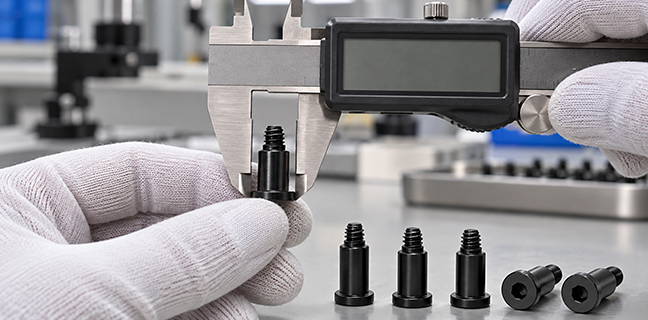
This shoulder screw features a black zinc-nickel alloy surface treatment. Surface finishing is an important part of fastener manufacturing because it affects corrosion protection, surface appearance, and compatibility with the working environment.
Zinc-nickel alloy coatings are used on metal fasteners to provide corrosion protection. The coating acts as a protective layer over the steel substrate, helping reduce exposure of the underlying material to environmental conditions.
For fastening components used in equipment manufacturing, surface protection is relevant during storage, transportation, assembly, and operation.
Actual corrosion resistance depends on coating composition, coating thickness, post-treatment, and testing conditions. Buyers with specific corrosion-resistance requirements should confirm the applicable coating specifications and test results with their supplier.
The black finish provides a consistent external appearance that can be suitable for equipment components requiring a darker surface color.
In 3D printer assemblies, fasteners may be visible around mechanical structures and equipment enclosures. A consistent black finish can help maintain visual uniformity across assembled components.
During production, surface treatment quality should be evaluated through several important factors:
Coating coverage across the screw head and threaded areas
Surface color consistency
Coating adhesion
Surface defects and visible irregularities
Corrosion resistance according to the agreed testing standard
For OEM fastening projects, buyers should specify the required coating performance rather than relying on color alone to determine surface treatment quality.
Manufacturing a specialized self-tapping screw requires control over material preparation, head configuration, thread geometry, and surface finishing. Each production stage can influence the dimensional consistency and functional performance of the finished fastener.
The production process begins with selecting 1018 steel that meets the required material specifications.
Raw material quality affects subsequent forming operations and the consistency of the finished screw. Material inspection helps identify potential variations before production begins.
The screw head is formed according to the specified flat-head configuration. The internal hex socket is also produced to accommodate the corresponding installation tool.
Head dimensions, socket depth, and drive geometry are important inspection points. Inconsistent socket dimensions may lead to poor tool engagement, while variations in head geometry can affect the seating condition.
The tri-lobular thread profile must be formed consistently to achieve the intended self-tapping function.
Thread-forming operations influence the thread profile, dimensional accuracy, and surface condition. In mass production, controlling tooling conditions and forming consistency helps reduce dimensional variations between batches.
After the required forming and finishing operations, the screw receives its black zinc-nickel alloy surface treatment.
The plating process must provide consistent coverage while maintaining the required external appearance and coating performance. Thread dimensions and surface condition should also be considered when evaluating the finished fastener.
Before delivery, finished screws should undergo inspection according to the agreed product specifications.
Important inspection areas include overall dimensions, head configuration, socket geometry, thread profile, material requirements, and surface treatment quality.
Suitable packaging also helps protect the screws from damage, contamination, and surface deterioration during storage and transportation.
3D printers rely on mechanical assemblies that require accurately selected fastening components. Structural frames, mounting elements, internal brackets, and other mechanical parts must be assembled with suitable fasteners.
This 2.6X14-CB shoulder screw is intended for the 3D printer industry and can be evaluated for compatible fastening applications.
3D printer structures contain multiple connected components that must remain properly positioned during equipment operation.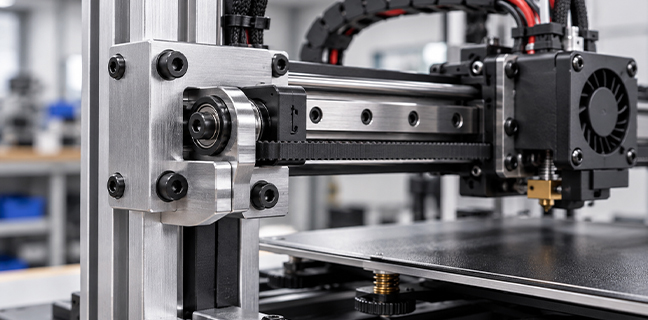
Fasteners play an important role in connecting these components and maintaining assembly integrity. The flat-head configuration may be useful where reduced head protrusion is required, provided the mounting geometry is compatible.
Space limitations are common in compact mechanical equipment. The internal hex socket and flat-head configuration provide a fastening design that can be considered for assemblies with restricted surrounding space.
Before installation, equipment designers should verify the available clearance, tool access, and head seating requirements.
3D printer equipment may require maintenance, component replacement, or mechanical adjustment throughout its service life.
The hex socket provides a defined driving interface for installation and removal using compatible tools. Correct tool engagement and appropriate tightening procedures are important for minimizing socket damage during maintenance.
When selecting self-tapping shoulder screws for 3D printer applications, buyers should evaluate several factors:
Compatibility between screw geometry and mounting hole dimensions
Receiving material and thread-forming requirements
Available installation space
Required fastening strength
Surface treatment requirements
Assembly and maintenance conditions
These factors help determine whether a particular shoulder screw is appropriate for the intended equipment design.
Consistent quality is essential when supplying fastening components for industrial equipment production. Even small variations in screw dimensions or thread geometry may affect installation and assembly compatibility.
A professional shoulder screw manufacturer should establish inspection procedures covering the main characteristics of the product.
Dimensional inspection verifies that finished screws conform to the agreed drawings and product specifications. Important dimensions may include screw diameter, length, head dimensions, and other drawing-defined features.
The tri-lobular thread structure requires appropriate inspection to confirm profile consistency and dimensional conformity.
Thread inspection helps identify forming variations that could affect thread engagement and installation performance.
Material verification helps confirm that the selected steel grade meets the specified requirements. Material documentation and inspection methods should be agreed upon according to the customer's quality standards.
The black zinc-nickel alloy finish should be checked for coating coverage, appearance, adhesion, and applicable corrosion-resistance requirements.
Where required, functional testing can evaluate installation behavior using representative mating materials and hole dimensions. This helps determine whether the screw performs as expected under the intended assembly conditions.
Different equipment manufacturers have different fastening requirements. Standard screw specifications may not always match the mechanical structure, assembly process, or environmental conditions of a particular application.
Working with an experienced shoulder screw manufacturer can help buyers evaluate suitable fastening designs and develop components according to technical requirements.
For OEM and ODM projects, customization may involve:
Product dimensions based on technical drawings
Different steel material requirements
Flat-head and other head configurations
Hex socket and alternative drive designs
Self-tapping and specialized thread configurations
Zinc-nickel alloy and other surface treatment options
Product inspection and packaging requirements
When requesting a quotation, buyers are encouraged to provide technical drawings, samples, annual demand estimates, and application information.
These details help the shoulder screw supplier evaluate production feasibility, confirm product requirements, and recommend an appropriate manufacturing solution.
Whether you are sourcing self-tapping shoulder screws for 3D printers or specialized fasteners for other mechanical equipment, accurate specifications are essential for ensuring product compatibility.
A shoulder screw is a specialized fastening component that incorporates a shoulder section into its design. Depending on its geometry, the shoulder may provide a locating, spacing, or supporting function in mechanical assemblies.
2.6X14-CB is the product specification provided for this shoulder screw. The exact dimensional interpretation and the meaning of the CB suffix should be confirmed against the manufacturer's technical drawing or internal product standard.
This product uses 1018 steel, a low-carbon steel commonly used in industrial fastening components and mechanical manufacturing.
A tri-lobular self-tapping screw uses a three-lobed thread-forming profile to help create mating threads during installation. In compatible materials and hole conditions, this design can support thread formation and reduce installation torque.
Black zinc-nickel alloy is a surface treatment that provides corrosion protection and a black finish. Its actual corrosion performance depends on the coating specification and testing conditions.
This product is designed for the 3D printer industry. Its suitability for a specific assembly should be verified according to mounting dimensions, receiving material, installation requirements, and mechanical conditions.
Yes. Custom shoulder screw production can be discussed according to technical drawings, samples, dimensions, material requirements, thread configurations, and surface treatment specifications.
Buyers should ideally provide product drawings, required dimensions, material specifications, surface treatment requirements, application details, and estimated order quantities. This information helps the manufacturer assess production requirements and provide a more accurate quotation.
| Product Code | ALSA1190028 |
| Description | Flat-head hex-socket tri-lobular self-tapping shoulder screw |
| Specifications | 2.6X14-CB |
| Material | 1018 (Steel) |
| Surface Treatment | Black zinc-nickel alloy |
| Application Industries | 3D printer |

We are a specialized manufacturer of non-standard/ standard cold heading screws, bolts, studs, rivets, CNC lathe parts, and other metal fasteners.
Copyright © 2026 DongGuan AOYI Hardware Co., Ltd All rights reserved.
Privacy Policy Cookie Policy Terms and Conditions