


A shoulder screw and a standard machine screw may look similar, but they serve different mechanical purposes. A standard machine screw primarily provides fastening through threaded engagement, while a shoulder screw combines a threaded end with a precision-machined, unthreaded cylindrical shoulder. This shoulder can function as a pivot, guide, spacer, or bearing surface in mechanical assemblies.
For equipment manufacturers, industrial buyers, wholesalers, and importers, choosing between these fasteners affects assembly accuracy, movement, load distribution, and long-term wear. The differences also extend to manufacturing methods, dimensional tolerances, material selection, and inspection requirements. Understanding these factors helps buyers specify the correct fastener and evaluate the manufacturing capabilities of potential suppliers.
Structural Differences Between Shoulder Screws and Machine Screws
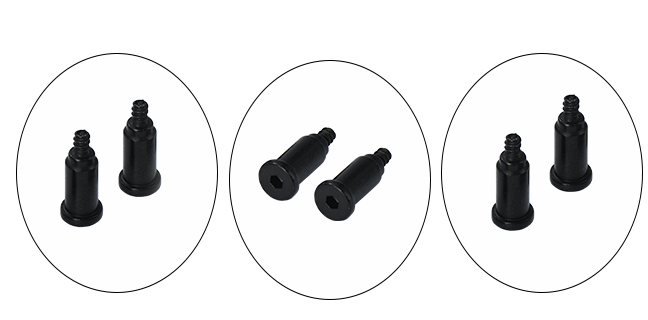
The main difference lies in the geometry and function of the unthreaded section. A shoulder screw typically consists of a head, a precision cylindrical shoulder, and a threaded end. The shoulder has a controlled diameter and length, allowing it to support rotating or sliding components without exposing threads to the working surface.
A standard machine screw generally has threads extending along most or all of its usable shank. Its primary purpose is to secure two or more components through threaded engagement with a nut or tapped hole. It is not normally designed to provide a precision bearing surface.
These structural differences affect how the fasteners perform:
Shoulder screw: Supports positioning, rotation, sliding movement, and spacing in mechanical assemblies.
Machine screw: Provides clamping force to hold components together.
Shoulder diameter: Determines the fit between the screw and the mounted component.
Thread dimensions: Determine compatibility with the mating nut or threaded hole.
For example, a shoulder screw can act as a pivot pin in a linkage mechanism, while a standard machine screw is more suitable for securing a bracket or housing where controlled rotational movement is unnecessary.
How Shoulder Screws Differ in Mechanical Performance
Shoulder screws are selected when an assembly requires controlled movement or accurate positioning. Their smooth cylindrical section provides a contact surface for bushings, rollers, bearings, and rotating parts. The shoulder also separates the moving component from the threaded section, reducing direct contact between threads and working surfaces.
Standard machine screws are designed primarily for fastening. Their performance depends on thread engagement, clamping force, material strength, and resistance to loosening. Although they can secure components reliably, their threaded shanks are generally unsuitable as precision shafts because thread geometry creates an irregular contact surface.
Load distribution is another important difference. In a correctly designed shoulder screw assembly, the shoulder can transfer radial loads into the supporting structure, while the threaded section provides axial retention. However, shoulder screws must still be sized according to bending stress, shear loads, bearing pressure, and the actual operating conditions.
Using a standard machine screw where a precision shoulder is required may cause uneven wear, excessive clearance, component misalignment, or inconsistent movement. Conversely, specifying a shoulder screw for a simple fastening application may increase cost without providing a meaningful functional benefit.
Material Selection and Its Effect on Fastener Performance
Material selection determines the strength, wear resistance, corrosion behavior, and machining characteristics of both fastener types. Common shoulder screw materials include alloy steel, carbon steel, and stainless steel. Standard machine screws are also available in these materials, depending on the application and required mechanical properties.
Alloy steel is often selected for applications requiring higher strength and wear resistance. Stainless steel is suitable for environments where corrosion resistance is important, although its mechanical properties depend on the specific grade and heat treatment. Carbon steel offers a practical balance of strength, machinability, and production cost for many general industrial applications.
For shoulder screws, material selection must also consider the contact conditions along the cylindrical surface. Repeated rotation or sliding can cause wear if the material hardness, surface finish, and mating component are unsuitable.
A shoulder screw manufacturer should consider the complete assembly rather than selecting material based only on tensile strength. Hardness, surface treatment, lubrication, operating temperature, and environmental exposure all influence service life.
Manufacturing Processes: Why Shoulder Screws Require Precision Machining
Although both fasteners can be produced through turning, forming, and thread machining, shoulder screws require particular attention to shoulder diameter, concentricity, surface finish, and shoulder length. These dimensions directly affect assembly fit and mechanical movement.
In production, the manufacturing method depends on material, geometry, order quantity, and tolerance requirements. Cold heading can efficiently form screw heads and basic blanks for suitable designs. CNC turning or precision machining is commonly used when tighter control of the shoulder geometry is required.
The shoulder must maintain a consistent cylindrical profile. Excessive diameter variation can make assembly difficult, while an undersized shoulder may create unwanted clearance. Poor concentricity between the head, shoulder, and threaded section can cause uneven rotation or vibration.
Thread rolling or thread cutting is selected according to material, geometry, and production requirements. Thread rolling forms threads through plastic deformation and can improve thread surface characteristics. Thread cutting removes material and is useful for certain geometries or smaller production runs. Both methods require control of thread dimensions and surface quality.
After machining, deburring removes sharp edges and unwanted material that could interfere with assembly. Surface treatment may then be applied according to corrosion resistance, hardness, friction, and appearance requirements. Each process must be compatible with the specified dimensional tolerances.
Critical Quality Factors in Shoulder Screw Production
Unlike ordinary fastening screws, shoulder screws often function as mechanical locating or moving elements. Small dimensional deviations can therefore affect the performance of the complete assembly.
Shoulder diameter and length: These dimensions determine clearance, positioning, and the available contact area. Inconsistent dimensions may cause excessive play or interference during installation.
Concentricity and straightness: The head, shoulder, and threaded section should maintain the required alignment. Poor concentricity can cause uneven loading, vibration, and premature wear.
Surface roughness: The shoulder surface interacts directly with bushings or moving components. Excessive roughness can increase friction and wear, while an unsuitable surface finish may affect lubrication and assembly fit.
Hardness and heat treatment: Heat treatment must provide the required mechanical properties without introducing unacceptable distortion. Excessive hardness variation or dimensional changes can affect service performance.
Thread accuracy: The threaded section must match the specified thread standard and tolerance class to ensure reliable installation and retention.
For a shoulder screws manufacturer, controlling these characteristics requires consistent machining parameters, suitable measuring equipment, process monitoring, and documented inspection procedures.
How Manufacturers Inspect Shoulder Screws and Machine Screws
Quality inspection should focus on the dimensions and mechanical characteristics that determine the fastener's intended function. A standard machine screw inspection typically emphasizes thread dimensions, head dimensions, length, material properties, and mechanical performance.
Shoulder screw inspection requires additional attention to the precision cylindrical section. Manufacturers commonly use micrometers, vernier calipers, height gauges, thread gauges, and optical measuring equipment to verify critical dimensions.
Concentricity and runout measurements help identify alignment problems between the shoulder and other sections. Surface roughness testing evaluates the finish of functional contact areas. Hardness testing and material verification help confirm that the fastener meets the specified mechanical requirements.
For production batches, first-article inspection establishes whether the initial parts meet the drawing requirements. In-process inspection identifies machining deviations before large quantities are completed, while final sampling verifies finished-product consistency.
Where required, salt spray testing can evaluate corrosion resistance, and mechanical testing can verify specified strength properties. Inspection frequency and acceptance criteria should be based on customer drawings, applicable standards, and the risk associated with the application.
Common Applications and How to Choose the Right Screw
Shoulder screws are widely used in mechanical assemblies where accurate positioning or controlled movement is required. Typical applications include hinges, rollers, guide mechanisms, automation equipment, industrial machinery, and precision fixtures.
Standard machine screws are more commonly used for fastening electrical enclosures, equipment panels, brackets, housings, and structural components where the primary requirement is secure clamping.
When choosing between the two, buyers should consider whether the fastener needs to support movement, whether a precision cylindrical surface is required, and how the load will be transferred through the assembly.
For custom shoulder screws, engineering drawings should clearly define shoulder diameter, shoulder length, head dimensions, thread specification, material, hardness, surface treatment, and dimensional tolerances. Providing these details reduces manufacturing misunderstandings and improves consistency between samples and mass production.
What to Look for in a shoulder screw supplier
Choosing a reliable shoulder screw supplier involves evaluating more than unit price and delivery time. Buyers should understand whether the supplier can maintain dimensional consistency and manufacture fasteners according to detailed engineering drawings.
A qualified shoulder screws supplier should be able to provide information about material sourcing, machining capabilities, thread processing, heat treatment, surface finishing, and inspection procedures.
When evaluating a shoulder screw factory, buyers should pay particular attention to:
Machining capability: Equipment suitable for controlling shoulder diameter, length, and concentricity.
Material control: Reliable material identification and traceability.
Dimensional inspection: Measuring equipment for critical shoulder and thread dimensions.
Surface treatment: Processes matched to corrosion resistance and application requirements.
Custom production: Ability to manufacture non-standard dimensions and specifications.
Quality documentation: Inspection reports and material records where required.
For OEM and wholesale orders, sample approval should be followed by production controls that ensure mass-produced parts maintain the same dimensions, materials, and functional characteristics as the approved sample.
Frequently Asked Questions
Can a standard machine screw replace a shoulder screw?
Only when the application requires simple fastening and does not depend on a precision cylindrical surface. If the screw supports rotation, sliding, or accurate positioning, a standard threaded shank may cause excessive wear or misalignment.
Why is shoulder diameter so important?
Shoulder diameter determines the fit with the mating component. Incorrect dimensions can create excessive clearance, interference, uneven loading, or poor rotational performance.
Are shoulder screws available in stainless steel?
Yes. Stainless steel shoulder screws are available for applications requiring corrosion resistance. The appropriate grade should be selected according to strength, environment, and operating conditions.
Can shoulder screws be customized?
Yes. Manufacturers can produce customized shoulder lengths, diameters, head configurations, thread specifications, materials, and surface treatments according to engineering drawings and production requirements.
Conclusion
The main difference between shoulder screws and standard machine screws is their functional design. Standard machine screws primarily provide fastening, while shoulder screws combine threaded retention with a precision cylindrical section for positioning, spacing, and mechanical movement.
For industrial buyers and OEM manufacturers, selecting the correct fastener requires evaluating load conditions, dimensional tolerances, materials, surface finish, and manufacturing quality. Working with an experienced shoulder screw manufacturer helps ensure that critical dimensions and mechanical requirements remain consistent from sample approval through mass production.
