


Why Your Hex Phillips Screws Keep Breaking:Material&Torque Analysis from a Manufacturer
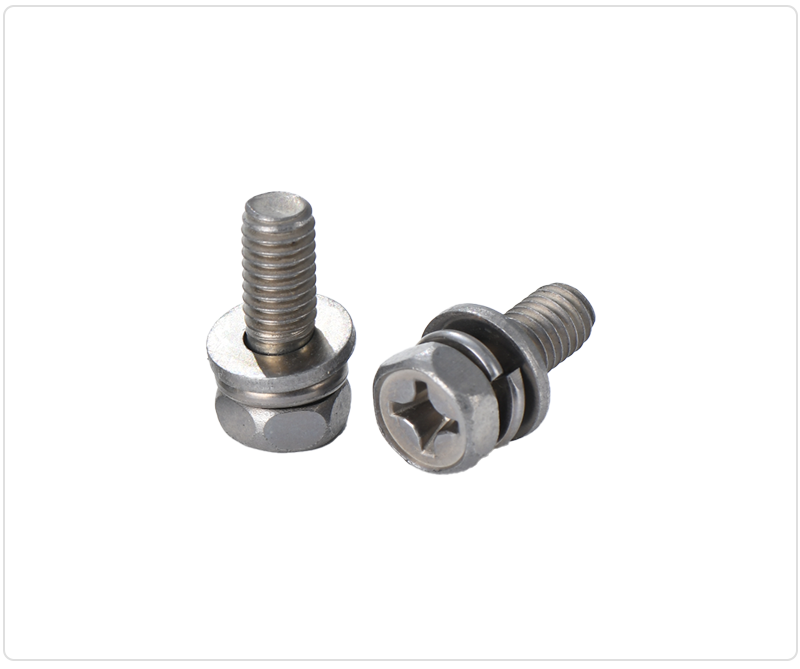
Hex Phillips Head screws are widely used in automotive,machinery,and electronic assemblies due to their dual-drive convenience and high fastening efficiency.However,one of the most frustrating and costly issues engineers face is unexpected screw breakage during installation or operation.
If your screws keep breaking,the root cause is rarely random.In most cases,it comes down to three critical factors:material selection,torque control,and application matching.As an experienced Hex Phillips Head manufacturer,we will break down these failure causes and provide practical solutions to help you prevent them.
1.Where and Why Do Hex Phillips Screws Break?
Understanding failure points is the first step in solving the problem.In real-world applications,screw breakage typically occurs in the following areas:
Head failure–caused by excessive torque or improper tool engagement
Shank fracture–due to insufficient material strength or overload
Thread damage–resulting from poor fit with the mating material
Among these,torque-related damage is the most common yet often overlooked issue in assembly processes.
2.Material Selection:The Hidden Risk Behind Breakage
Choosing the wrong material is one of the leading causes of fastener failure.Different applications demand different mechanical properties,and using a mismatched material significantly increases the risk of breakage.
Low carbon steel–economical but limited in strength
Medium carbon steel(Grade 8.8/10.9)–suitable for most industrial applications
Stainless steel(304/316)–excellent corrosion resistance but lower tensile strength
For example,stainless steel screws are often used for corrosion resistance,but in high-torque environments,they are more prone to fracture compared to alloy steel screws.
3.Torque Control:The#1 Cause of Screw Failure
Improper torque application is responsible for the majority of screw breakage issues in assembly lines.
Over-Tightening
Applying excessive torque pushes the screw beyond its yield strength,causing internal stress concentration.This often leads to sudden breakage at the head-to-shank transition.
Under-Tightening
Insufficient torque results in loosening under vibration.Over time,repeated stress cycles can lead to fatigue failure and eventual breakage.
Key recommendation:Always follow the recommended torque range for each screw size and grade,and use calibrated torque tools for consistency.
4.Drive System Misuse:A Common but Overlooked Issue
Hex Phillips head screws offer dual-drive functionality,but improper use can lead to damage:
Using an incorrect screwdriver size can cause stripping
Applying high torque using only the Phillips drive increases failure risk
Misalignment during installation leads to uneven stress distribution
Best practice:For high-torque applications,prioritize the hex drive to ensure better force distribution and reduce the risk of damage.
5.Application Mismatch:Not All M6 Screws Perform the Same
Even screws with the same size(such as M6)can vary significantly depending on their specifications:
Thread pitch and tolerance
Surface coating(zinc plating,black oxide,etc.)
Heat treatment quality
Using a standard screw in a high-vibration,high-load,or corrosive environment can drastically reduce performance and lifespan.
6.How to Prevent Hex Phillips Screw Breakage
Based on manufacturing and field experience,here are the most effective ways to prevent screw failure:
Select the correct material grade for your application
Apply proper torque using calibrated tools
Use the correct driver size and type
Ensure proper alignment during installation
Use lubrication or coatings to reduce friction
Work with reliable manufacturers for consistent quality
7.Manufacturer Insight:Why Quality Control Matters
The durability of a screw is not only determined by design but also by manufacturing quality.Key factors include:
Cold heading precision
Heat treatment consistency
Surface finishing quality
Mechanical performance testing
Poor manufacturing processes can introduce internal defects that are invisible but can cause sudden failure under stress.This is why sourcing from a professional Hex Phillips Head manufacturer is essential for ensuring long-term reliability.
If your Hex Phillips screws keep breaking,the solution is not just replacing them—it requires optimizing material selection,torque control,and application matching.
By addressing these key factors,you can significantly reduce failure rates,improve assembly efficiency,and extend the lifespan of your products.
